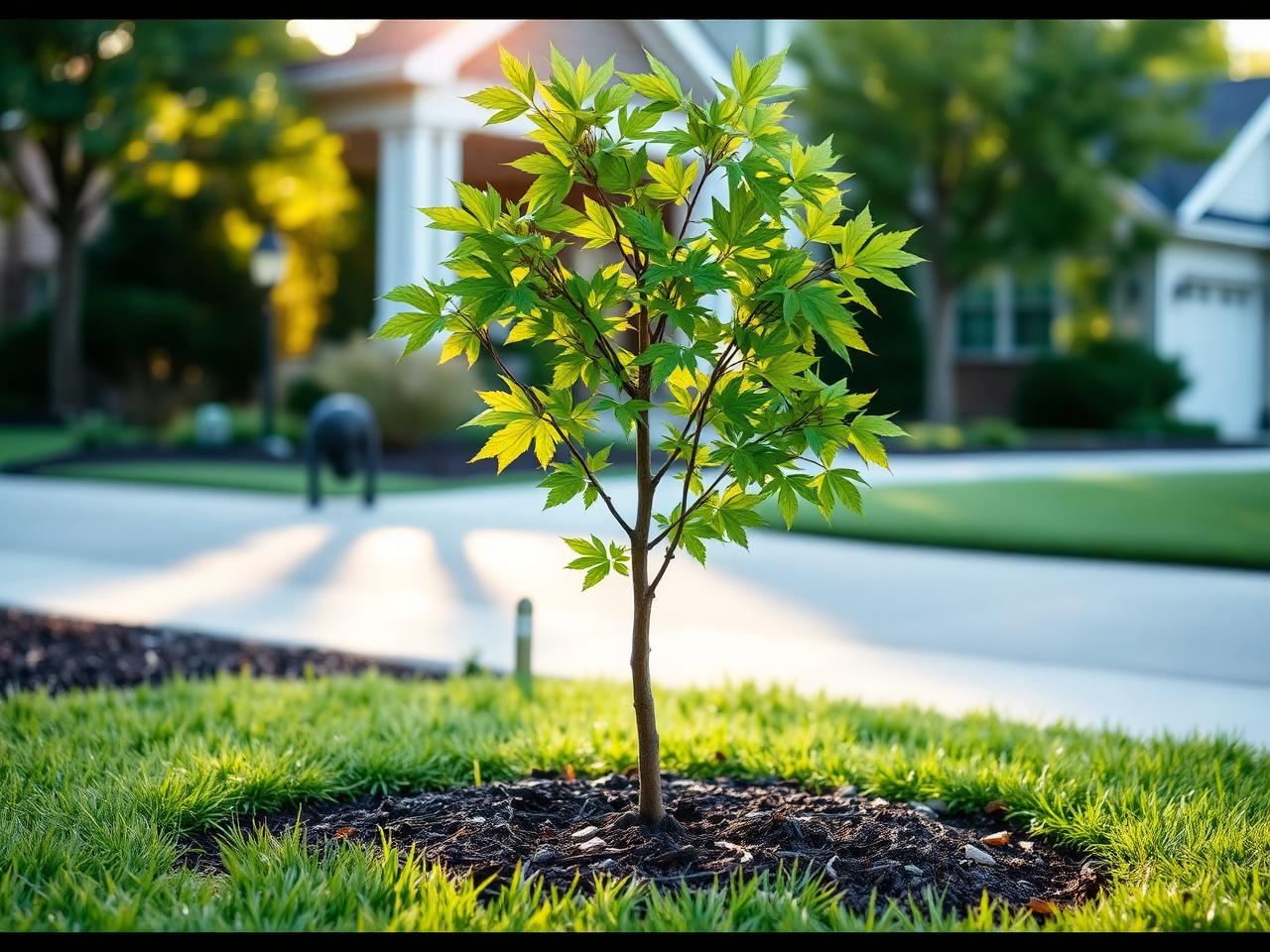
The most common tree-planting mistake we see in Lansing isn't where you plant — it's what you plant. A short list of species that actually thrive here.
Half the tree problems we're called out to fix start at the moment of planting. Big-box nurseries sell whatever moves, not necessarily what belongs in Mid-Michigan soil. A tree that's mismatched to its site will struggle for its entire life, no matter how well you water and prune it.
Sugar maple and red maple remain reliable workhorses for most Lansing properties. They handle our clay-heavy soils, tolerate suburban conditions, and deliver the kind of fall color that drives property values up. Avoid silver maple if you have any kind of foundation, sewer line, or patio nearby — the roots are notorious.
For smaller yards, serviceberry, eastern redbud, and American hornbeam are excellent choices that top out around 20–25 feet and won't outgrow their site. They give you flowers in spring, structure in winter, and minimal cleanup year-round.
If you want a long-lived shade tree, swamp white oak and bur oak are both native to Michigan, handle a wide range of soil conditions, and are highly resistant to the diseases that have devastated our ash and elm populations. They're slow starters but become magnificent.
Trees to avoid as new plantings in Greater Lansing: Bradford pear (structurally weak, splits in storms), Norway maple (invasive, shallow rooted), Colorado blue spruce (suffers badly from needle cast disease in our humidity), and any green ash unless you're committed to ongoing emerald ash borer treatment.
We're happy to walk a property and recommend the right species for your specific spot — sun exposure, soil drainage, mature size, and proximity to structures all matter. Getting the choice right at planting saves years of corrective work later.